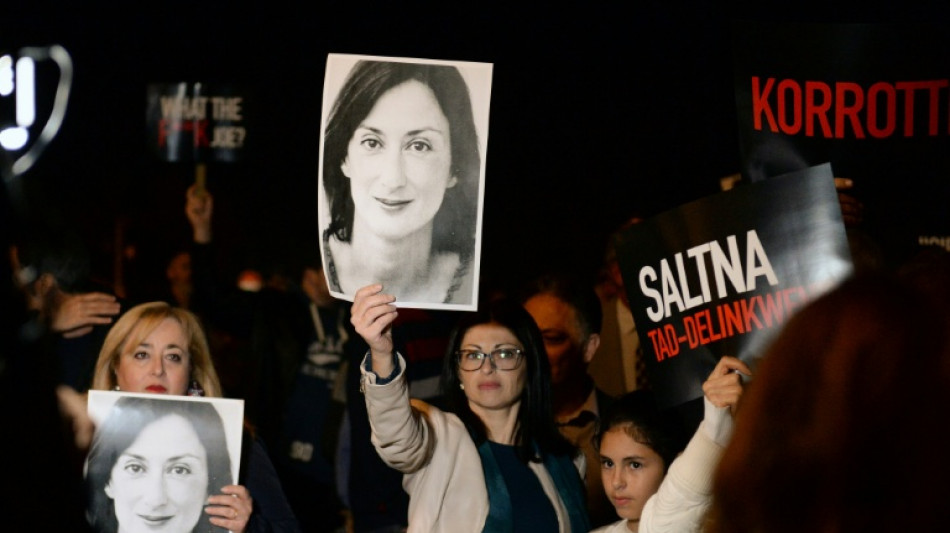
Caruana Galizia: 'one-woman WikiLeaks' who exposed Malta's shady side / Photo: Matthew Mirabelli - AFP
Illicit trafficking, bribes, offshore accounts: Maltese journalist Daphne Caruana Galizia, murdered with a car bomb in 2017, fearlessly exposed corruption in her archipelago in the heart of the Mediterranean.
In the final entry on her blog, posted barely half an hour before she was killed, Caruana Galizia wrote: "There are crooks everywhere you look now. The situation is desperate".
Nearly nine years on, the Maltese justice system has still not determined who ordered the murder of the investigative journalist.
Five men have been convicted of supplying the explosives and carrying out the killing.
On Wednesday, Maltese tycoon Yorgen Fenech, who had been accused of masterminding it, was acquitted by a court in Valletta.
The businessman was arrested at the end of 2019 on board his yacht as he tried to leave Malta.
According to the indictment, he had ordered the journalist’s murder because she was about to publish a compromising article about a family member.
- 'Poison pen' -
Born on 26 August 1964, Caruana Galizia had worked as a columnist for several Maltese media outlets, including The Sunday Times of Malta and The Malta Independent.
But it was above all through her blog, Running Commentary, followed by some 400,000 readers on an island with half a million inhabitants, that she became known far beyond Malta.
Dubbed the "one-woman WikiLeaks", she never gave in to attempts at intimidation.
She was survived by her husband and three sons, who have fought for justice for years.
Her biting, uncompromising style earned her the label of "poison-pen writer" from her critics.
In Malta, home to 70,000 offshore companies and the headquarters of some of the world’s largest gambling groups, she wielded her pen against ministers and businessmen.
The mass of documents she left behind was taken up by 45 journalists from 18 media outlets brought together in the "Daphne Project" -- one of the first initiatives of the NGO Forbidden Stories, which continues the investigations of journalists who have been silenced.
Her assassination exposed corruption at the highest levels of the state and triggered a political crisis, forcing then prime minister Joseph Muscat to resign in 2020.
Muscat was accused of having interfered in and protected associates during the investigation into the journalist’s murder.
The crisis did not prevent Muscat’s Labour Party from remaining in power: his successor Robert Abela was comfortably re-elected earlier this year.
S.Lebrun--PP