Maharashtra Accepts Tribal Students’ Demands After 17-Day Protest



Tribal students suspended a hunger strike after Maharashtra provided written, time-bound commitments on recruitment, residential schools and other demands.
The Maharashtra government accepted the demands of tribal students on Saturday, more than 17 days after hunger strikes began in several parts of the State.
A delegation left Chief Minister Devendra Fadnavis’s official residence, Varsha, saying it was satisfied after receiving an implementation schedule. A central demand concerns recruitment to 12,500 positions reserved for tribal candidates.
Student leader Suraj Iccharam Kokani thanked Rahul Gandhi, Rohit Pawar, Yashomati Thakur and other political leaders, saying the students’ concerns had been raised nationally for the first time.
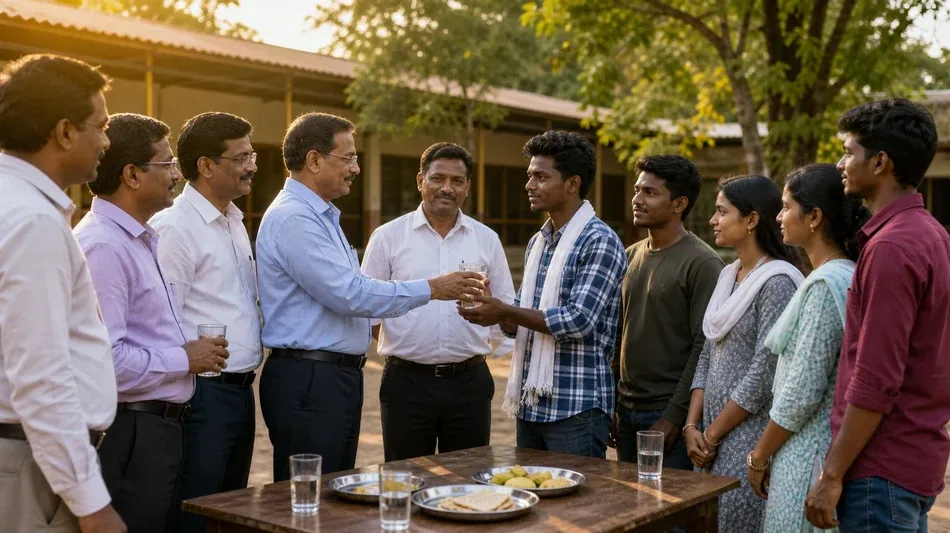
Tribal Affairs Minister Ashok Uike met the protesters late Saturday and presented written assurances. The students then suspended their agitation, warning that it would resume if the government missed the promised deadlines. Uike offered juice to those who had been fasting.
The government said the demands would be addressed on a defined schedule. Officials would determine the number of vacancies within three months and conduct recruitment over the following three months, in accordance with Supreme Court directions. Recruitment under the Panchayats (Extension to Scheduled Areas) Act would also proceed.
Government officials said a separate recruitment drive could be held if necessary to complete appointments within six months. Filling the pending posts was the protesters’ main demand.
Seven student representatives from Nagpur, Pune and Nandurbar attended the meeting with Fadnavis. The protests covered more than 14 demands, including improved facilities at tribal schools and hostels, completion of delayed hiring and publication of caste-validity committee judgments online.
Students said they received two new government resolutions relating to the settlement, in addition to written assurances and timelines.
Another major demand was action against people who obtained government jobs using fraudulent Scheduled Tribe certificates. Kokani said employees selected under the ST category must provide caste-validity certificates within six months, yet some had remained in posts for a decade without doing so.
Fadnavis said action against holders of bogus certificates would begin immediately. The government also said future candidates would have to submit valid certificates before receiving final appointment letters.
Safety and infrastructure in tribal residential schools formed another part of the agreement. Uike said measures would follow a third-party audit of ashram shaalas.
The written commitments include starting hostel mess facilities within three months and ending the direct-benefit-transfer food allowance. The State will examine a requested increase in funding and address gaps in the central-kitchen system.
Officials also promised to review schools covered by that system and design tender clusters more scientifically to reduce logistical difficulties.
New standard operating procedures are planned for privately aided ashram schools. The SWAYAM scheme will be expanded to cover all courses and eleventh-standard students at the taluka level.
The settlement brought the current hunger strike to an end, but the students tied that decision to the government meeting each written deadline.
W.Adam--PP