Quarantine, unease and rumours: Russian city grapples with plague scare / Photo: TATYANA MAKEYEVA - AFP


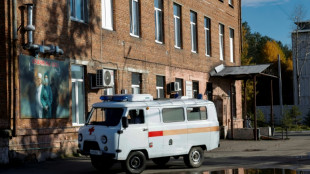
When a woman died of suspected plague in Siberia last week, Oksana was in the maternity ward for observation.
"Everything was fine, and then they told us that a woman had died. And they wouldn't let anyone in or out," the 35-year-old told AFP.
For four days, she was kept in hospital in Shelekhov, the same town where a 28-year-old lab worker, Darya Shipilova, had been hospitalised before she was reported to have died of plague.
Russian authorities have downplayed the incident, saying that she died from "pneumonia of an unknown aetiology" and that post-mortem analysis showed no trace of an infection connected with her "professional work" at the Irkutsk anti-plague institute.
Local media reports suggested she could have contracted the disease after breaking a test tube at the laboratory.
The incident has triggered global concern about a possible outbreak and calls for Russia to provide more information.
It has also drawn criticism and comparisons with Moscow's long history of downplaying or covering up the scale of health disasters -- ranging from the Soviet response to the 1986 Chernobyl disaster to the coronavirus pandemic.
In Shelekhov, rumours have filled the information abyss.
"I've read about it being some kind of unclear pneumonia or Covid, something like that. To be honest, I don't believe in anything anymore," Oksana, who declined to give her surname, told AFP.
"There's so much information that I no longer know what to believe or who to listen to."
"The day it happened, my mum rang me, shouting that 10 people had already died, even though there were no official reports," Alexandra Iskalova, a 22-year-old who works in a medical centre, told AFP.
"I'd read somewhere that it was something like Hong Kong syphilis, and that it was actually caused by bears," she said, referring to a fictional disease from a popular Russian TV show.
"People were absolutely panicking because there were no official statements," she added.
- 'We don't know' -
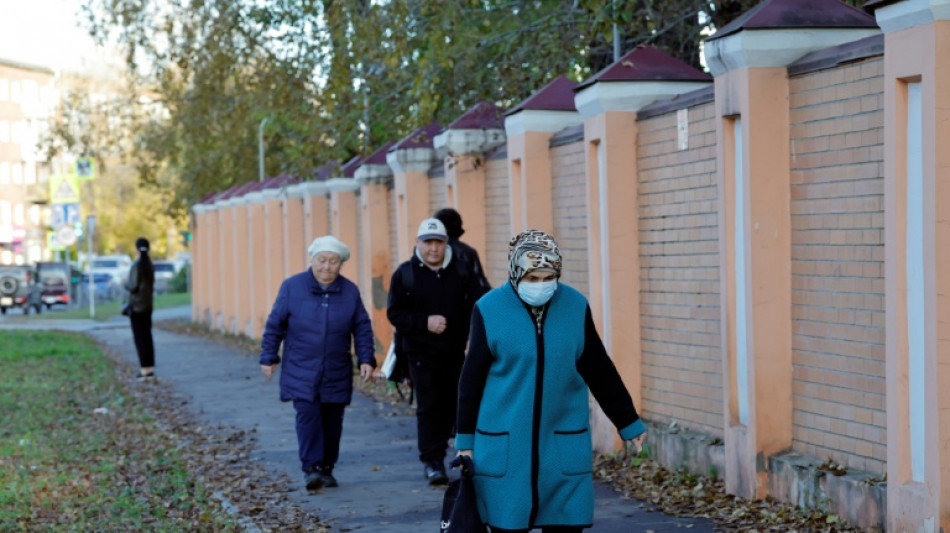
On the streets, the town appears outwardly calm -- no panic and few masks.
Yet many told AFP they are concerned.
"It's frightening," said Alina, 22.
"My brother's at primary school. They've already made masks compulsory, so they have to wear them everywhere. They're even allowed to stay off school if they're really worried."
She said her aunt works at the anti-plague institute and was also quarantined.
Tatyana, 66, is also frustrated by the lack of official guidance from the authorities.
"Of course we're worried ... How on earth are we supposed to protect ourselves?"
"We don't know how the infection spreads. Or how it's detected," she added.
"There are a lot of rumours going around, all kinds of information, and it's unclear what's true. In reality, nobody is telling us what actually happened."
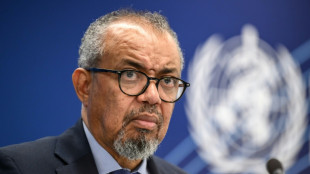
On Wednesday, World Health Organization (WHO) chief Tedros Adhanom Ghebreyesus urged Moscow to clarify "media reports of a second employee with pneumonia of undetermined cause" from the Irkutsk institute.
When asked about a possible second case, the Kremlin appeared to reject it.
"The vast majority of what the media is reporting regarding this situation is false information," spokesman Dmitry Peskov told reporters.
Rospotrebnadzor said Wednesday that the situation in the Irkutsk region remained "stable", and that nearly 5,000 tests had been conducted, none of which revealed dangerous pathogens.
US President Donald Trump has offered to "help" Russia and said he would call his Russian counterpart Vladimir Putin to discuss the reports.
That offer was widely laughed off on the streets of Shelekhov.
"It's just funny," said Olga, a 68-year-old former accountant.
"In his heart he was probably happy that Russia had some problems, some kind of 'plague'," she added.
"He'd probably be glad if we really had an epidemic in our country."
M.Perrier--PP