Indian captain 'scapegoat' in Britain's Russia shadow fleet case, wife says / Photo: Arun SANKAR - AFP



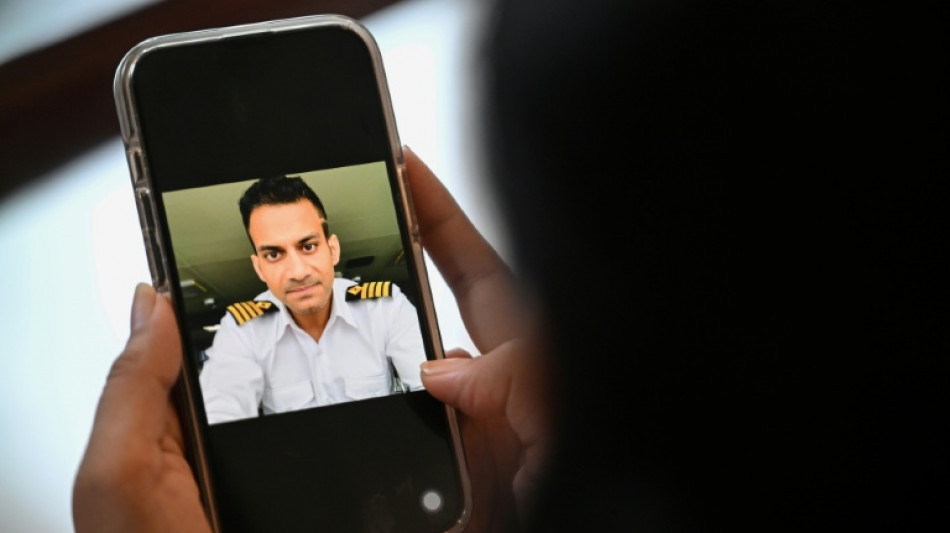
The Indian captain of an alleged Russian shadow fleet oil vessel seized by British commandos has been made a "scapegoat", his wife told AFP, as her husband awaits trial.
Ajay Pant, 38, in custody in Britain, has been charged with sanctions offences carrying a maximum 10-year prison sentence, in a case that could set a legal precedent for merchant seafarers.
"My husband just became the scapegoat," Ritu Pant, 36, told AFP in her first sit-down interview since her husband's arrest in June. "He was at the wrong place at the wrong time."
British commandos fast-roped from a helicopter on June 14 in the English Channel to intercept the sanctioned oil tanker Smyrtos, captained by Pant.
The tanker is allegedly part of Russia's ghost fleet, a network of vessels with opaque ownership and insurance, used by Moscow to evade oil sanctions imposed after its 2022 invasion of Ukraine.
According to MarineTraffic, the Smyrtos sailed from the Russian port of Ust-Luga on June 5, passing through the Baltic Sea, with Egypt's Port Said listed as its destination.
But as it crossed the Channel, commandos swooped.
Then-prime minister Keir Starmer hailed the mission -- the first UK-led operation of its kind -- as a "blow to Russia".
Pant's wife said he is the victim, and is struggling in custody after being denied bail.
"He was broken and he was just crying," she said, struggling to hold back her own tears, recalling their first phone call after his arrest.
"He didn't know what had happened to him... He just said, 'I am in jail, please take me out'."
- 'Early test' -
The prosecution's case is that Ajay Pant was the "master of the ship" and had "knowledge of the cargo", which amounted to some 98,000 tonnes of oil.
In a court hearing, Pant's lawyer said he was "simply following orders" as an employee of the vessel's owner -- an argument his wife reiterated.
"The master's responsibility in any vessel is to just get the cargo safely to its destination," she said.
Anwar Sadat, of the Indian Society of International Law, said the case raised "complex" legal questions.
Pant's trial, scheduled to begin on December 15, could become a key test as European nations step up action against Russia's shadow fleet.
It is believed to be the first case of a European country bringing sanctions-violation charges against the captain, rather than targeting the vessel or its owners.
"The case carries implications far beyond the fate of a single ship, its cargo or its master," David Hammond, of Human Rights at Sea International, wrote in an analysis for Lloyd's List Intelligence.
"It is likely to become an early test of how far Western governments are prepared to use criminal sanctions enforcement not only against shadow fleet operators, but also against the seafarers who work aboard their vessels."
India's foreign ministry said consular officials had visited Pant "to enquire about his wellbeing".
Pant was the only sailor on board to have been charged, with most of the other 24 crew members since repatriated. The vessel remains anchored off England's southern coast.
- 'Stuck in the middle' -
The case has made seafarers fearful of being "stuck in the middle" of a tug-of-war between rival powers, said Steve Yandell, coordinator of the seafarers' section of the International Transport Workers' Federation.
"Seafarers will often not know that their ship might be carrying sanctioned oil, and that they're potentially open to getting caught up in a geopolitical conflict," he said.
With more than 320,000 seafarers, India makes up a major part of the global merchant shipping workforce.
"This was very alarming," said Sanket Joshi, 40, a veteran Indian tanker captain.
It was "probably... the first time" a captain is arrested over "the commercial aspect" rather than safety issues, for example, he said.
For Pant's family in the sleepy Himalayan foothill town of Ramnagar, his arrest has brought those fears sharply into focus.
Days before his arrest, Pant wrote to his wife, worried about the impact of another conflict -- after several Indian sailors were killed at sea around the Strait of Hormuz during the war in the Middle East.
"He said that the sea is becoming very difficult now," Ritu Pant said. "I was just praying, and telling him that, 'just be calm, be careful and just keep contacting us'."
Pant's mother, Deepa, cried as she appealed to let her son return.
"I just want to plead to the government, with folded hands, to get my son back home."
W.Adam--PP