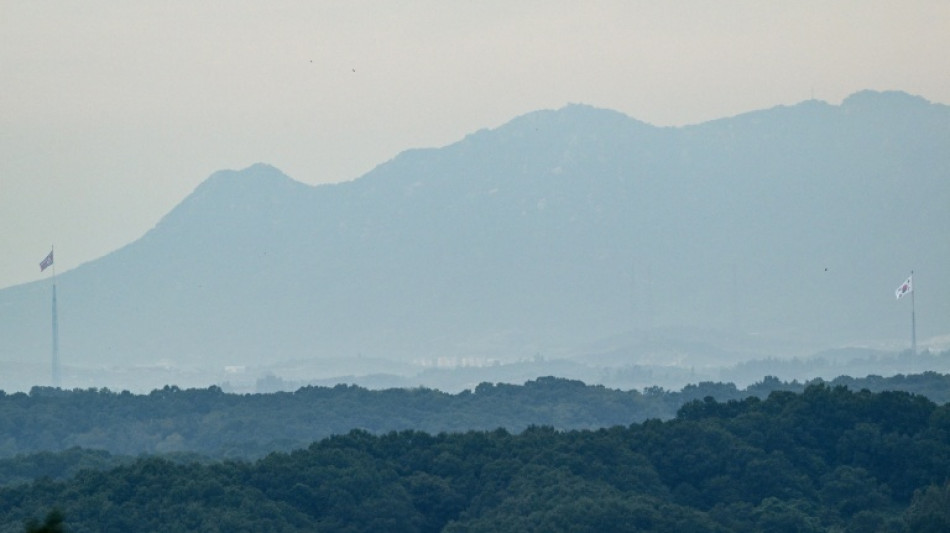
North Korean DMZ landmine blasts 'violation of armistice': Seoul / Photo: Lillian SUWANRUMPHA - AFP/File



The blasts that wounded three South Korean soldiers last week were apparently caused by North Korean mines, Seoul said Tuesday, adding it was an armistice violation that would prompt "corresponding measures".
One troop lost a foot due to the explosions in the Demilitarised Zone (DMZ), the heavily mined buffer zone that has divided the two Koreas since their 1953 armistice.
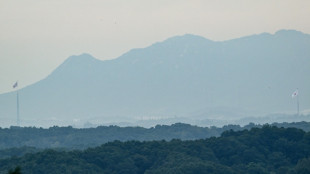
The northern and southern boundaries of the zone are among the world's most heavily fortified frontiers and landmine incidents have previously heightened tensions between the two Koreas.
Defence Minister Kang Shin-chul's comments came a day after his ministry said North Korean mines were "highly suspected" of causing the two explosions last week.
"This is a clear violation of the armistice agreement, and since North Korea bears responsibility, we will take corresponding measures," he told a parliamentary hearing, when asked whether the military had tentatively concluded that the mine was North Korean.
Kang said South Korean forces were in the DMZ to clear the area in advance of an operation with the UN Command to assess terrain changes caused by North Korean forces south of the Military Demarcation Line, which marks the nations' effective border.
The mine detectors used by the officials were the "latest models", the minister said, but detection efforts were hampered by dense vegetation in the area, noting that "clearing all the vegetation as they advanced was difficult".
"Our current assessment is that the mines may not have been detected because the detectors were being operated too far above the ground," he said.
At the hearing, Yang Jin-hyeok of the Joint Chiefs of Staff told lawmakers that a site investigation earlier on Tuesday discovered an unexploded North Korean plastic anti-personnel mine.
Kang told lawmakers the military "has a range of necessary measures at our disposal, and we will implement them in stages", without giving details.
Seoul and Pyongyang remain technically at war since the Korean conflict ended in a truce, not a peace treaty.
- 'Principal enemy' -
Kwon Dae-won, vice chairman of South Korea's Joint Chiefs of Staff, said Monday that two landmines exploded during the Sept 21 incident and that a third, unexploded mine was found while soldiers were withdrawing after the blast.
"Taking into account the crater and the pattern of the flames from the explosion, the extent of the injuries sustained by the service members... we assess that North Korean landmines are highly suspected to have caused the blast," Kwon said at the time.
Since 2024, after North Korean leader Kim Jong Un designated South Korea as his country's "principal enemy", Pyongyang's military has laid mines and built anti-tank barriers along the frontier as part of efforts to permanently seal it off.
In a 2015 landmine incident, two South Korean soldiers were seriously wounded in a blast on the southern side of the DMZ, with one losing both legs.
Seoul concluded that North Korean troops had crossed the Military Demarcation Line to plant the mines, an accusation Pyongyang denied.
The incident prompted South Korea to resume anti-Pyongyang loudspeaker broadcasts along the border.
G.Renaud--PP