Alberta Tabled Controversial Riding Boundary Maps Amid Gerrymandering Accusations
Alberta’s contentious new electoral riding boundary proposals were released to the public on Monday, triggering immediate condemnation from Opposition Leader Naheed Nenshi, who accused Premier Danielle Smith’s United Conservative government of attempting to rig the next election. The tabling of the maps sets the stage for a legislative debate and potential legal battles over the fairness of the redrawn districts.
Alberta’s hotly debated proposals for new electoral riding boundaries were released to the public on Monday, immediately reigniting political tensions as the Opposition New Democratic Party renewed its accusations that the government is manipulating the map to secure an unfair advantage in next year’s provincial election.
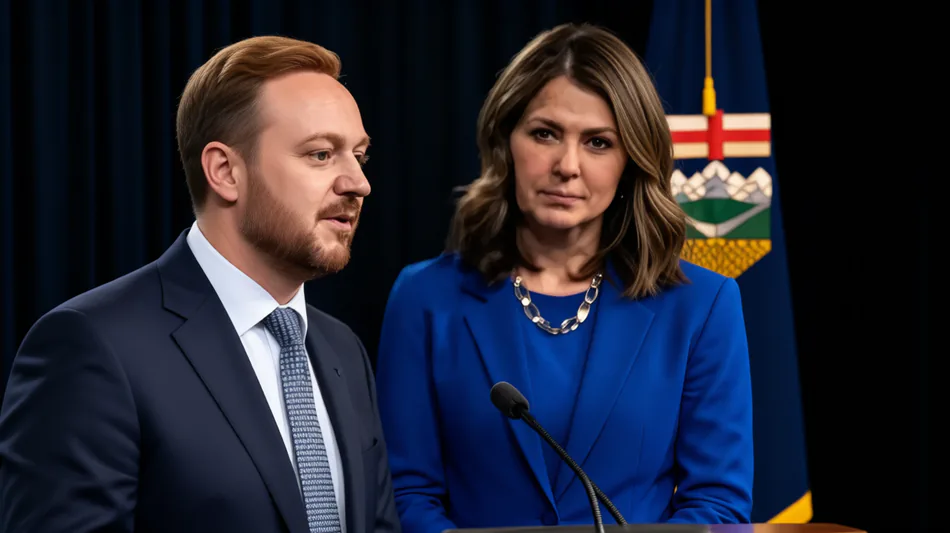
NDP Leader Naheed Nenshi declared that Premier Danielle Smith’s United Conservative government intends to use its legislative majority to "rig" the new boundaries. He stated that his party plans to challenge the report in court, arguing that the proposed changes are both illegal and unconstitutional.
"I believe that this report is illegal. I believe it is unconstitutional. I believe that the government still has the opportunity to do the right thing," Nenshi said during a press conference following the release. He added that if the government proceeds with what he characterized as cheating, "we’re going to win anyway, and their legacy will be that they lost even after cheating."
The controversy centers on specific geographic alterations recommended by the advisory panel. The report suggests splitting Lethbridge’s current two ridings into four, with three of those new districts extending into adjacent rural areas. Additionally, the proposals create new boundaries in Calgary by amalgamating three urban ridings in the west with neighboring rural constituencies.
Nenshi and other NDP officials have accused the United Conservatives of gerrymandering—drawing electoral districts based on voting patterns rather than shared geography or community priorities—to dilute opposition votes in key battleground areas. The party released a statement asserting that the maps "carve Lethbridge into four ridings and wildly expands Calgary ridings beyond city boundaries, watering down the voices and votes of Albertans."
The advisory panel’s report itself reflects deep internal divisions. It contains conflicting conclusions between the minority NDP appointees and the UCP-appointed majority, including the panel chair. The two sides disagree not only on the final recommendations but also on the scope of the panel’s original mandate.
Premier Smith has rejected the opposition’s claims, accusing Nenshi of questioning the integrity of the judges involved in the process, including Brian O’Ferrall, a former judge who chaired the panel. During a recent legislative session, Smith told Nenshi to stop complaining and begin campaigning instead.
Smith’s chief of staff, Rob Anderson, also addressed the accusations on social media, denying that the government was manipulating the vote. He described the NDP’s claims as a "lie," emphasizing that an independent, judge-led committee drew the new maps. Anderson argued that the opposition is resisting change because they do not want any adjustments that might "level the playing field."
The current dispute follows a turbulent process earlier this year when Smith rejected the main recommendations of a public boundaries commission. In a move that bucked political norms, her government voted down the previous commission’s split report in the legislature and restarted the redrawing process with a new advisory panel. This second panel operated under tighter timelines, did not hold public hearings, and received marching orders based on recommendations from the previous commission’s chair, including an expansion of the total number of ridings from 87 to 91.
Time is becoming a critical factor in the implementation of these changes. Alberta Chief Electoral Officer Gordon McClure has warned that he is running out of time to prepare for the scheduled polling day on October 18, 2027. McClure previously stated that the election should either be held with the current boundaries or postponed due to resource constraints.
Justice Minister Mickey Amery rejected McClure’s suggestion for a postponement over the weekend, stating that he expects the agency overseeing the vote to prepare within an 11-month window. Amery indicated that he anticipates the legislature will determine the final boundaries before the Christmas break.
McClure is scheduled to appear before a legislative committee later this week to discuss the logistical challenges ahead. The proposed maps are expected to go to a debate in the legislature later this week, setting the stage for further political and legal confrontation.
P.Bouvier--PP